


May arrives with the market in motion – but the benefits are not evenly distributed. Ships are rerouting around the Cape of Good Hope in growing numbers, yet South Africa’s ports are capturing only a fraction of the commercial opportunity passing their coastline.
Meanwhile, Hapag-Lloyd is withdrawing two Red Sea services and introducing Emergency Operations Charges across feeder networks from Ireland to the Indian Subcontinent – a clear signal that the cost of disruption is being passed further down the chain.
In the air, Africa has become the world’s fastest-growing airfreight region – posting 21% year-on-year growth – yet that momentum is running directly into tightening capacity,
On the compliance front, three new Revenue Laws came into effect on 1 April 2026.
At NATCO, we are helping our clients navigate the distance between where opportunity sits and where risk is quietly building – because it’s how it gets there that makes the difference.


SOUTH AFRICA’S PORTS: THE SHIPS ARE PASSING – BUT WHY AREN’T THEY STOPPING?
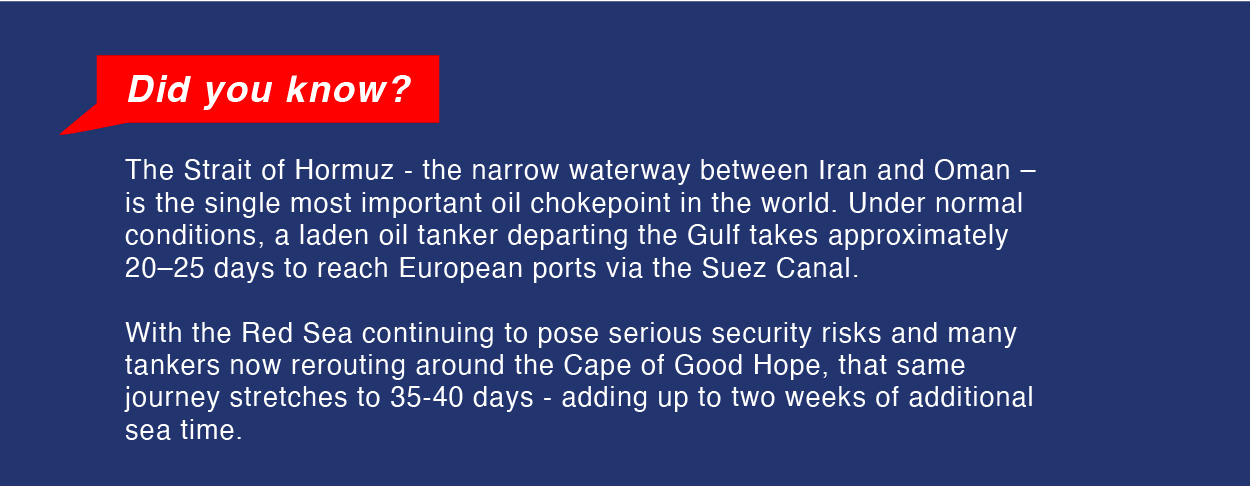
With more vessels rerouting around the Cape of Good Hope, South Africa should be well placed to benefit from increased ocean traffic. Yet while more ships are passing our coastline, too few are actually calling at our ports.
Recent industry discussions point consistently to the same issue: there is a meaningful gap between the volume of traffic moving past South Africa and the commercial benefit being captured locally.
Part of the challenge lies in the nature of these vessels. Many are large container ships that have no operational need to stop here, or that simply do not view South African ports as the most efficient option. Port reliability, weather delays, turnaround times, pricing and fuel availability all factor into that decision.
In the short term, bunkering may represent the most accessible opportunity. Even without cargo handling, vessels stopping for fuel, crew changes, supplies and marine services can generate real and meaningful economic value.
South Africa has the location. Now it needs to give shipping lines a compelling reason to stop.
That means more reliable port operations, competitive pricing, improved bunkering capacity, better service levels and a clear strategy to position our ports as a serious and attractive option on the Cape route.

HAPAG-LLOYD TO SUSPEND RED SEA SERVICES JD2 AND JD3
Hapag-Lloyd has announced the temporary suspension of its JD2 and JD3 services, effective 10 May 2026. The decision forms part of ongoing network adjustments in the Red Sea, aimed at consolidating capacity and maintaining operational stability across the region.
Final Voyages
Service: JD2 | Vessel: GSL Tinos V.620W | ETD: 11 May 2026 | Destination: Port Jeddah
Service: JD3 | Vessel: Merkur Ocean V.619W | ETD: 10 May 2026 | Destination: Port Jeddah

HAPAG-LLOYD: EMERGENCY OPERATIONS CHARGE – EOO / EOD
Hapag-Lloyd is introducing a new Emergency Operations Charge on selected routes where third-party feeder operators are applying additional operational or bunker-related costs. This charge is separate from the Emergency Fuel Surcharge and applies specifically to third-party feeder services.
The charge will appear as:
- EOO – Emergency Operations Charge at Origin
- EOD – Emergency Operations Charge at Destination
Affected Areas
Ireland, Denmark, Estonia, Finland, France, Great Britain, Norway, Poland, Sweden, the Middle East and Indian Subcontinent, Honolulu and Hawaii.

TRADELANE SUMMARY
Current tradelanes remain under pressure due to geopolitical disruption, vessel rerouting, port congestion, weather delays and inland transport constraints. The main affected areas are the Middle East and Gulf, Africa, North America, Europe and Asia Pacific. Key risks include longer transit times, schedule changes, port omissions, transshipment delays and rising surcharges.
Middle East and Indian Sub-Continent
Trade into the region remains volatile due to geopolitical disruption, rerouting, congestion and limited carrier services. Key risks include unpredictable delays, rising costs, poor schedule reliability and routing uncertainty – particularly into the Upper Gulf and Saudi Arabia.
Africa and Indian Ocean Islands
Services continue to be disrupted by vessel delays and rerouting around the Cape of Good Hope, driven by weather impacts, fuel pressures and port congestion. Key risks include longer transit times, schedule changes, vessel omissions, transshipment pressure and delays at major African and island ports.
North and Latin America
North American ports remain largely stable, but inland rail and trucking delays, weather impacts and tight schedules continue to affect container movement. In Latin America, Santos is experiencing disruption from carrier rotation changes, with some cargo being rerouted via Paranagua.
North West Continent, UK and Mediterranean
European terminals have improved slightly, but schedules remain vulnerable to Middle East disruption. Key risks include amended port rotations, vessel omissions, yard congestion, feeder delays and unscheduled transshipments.
Asia Pacific and Oceania
Capacity remains tight, with possible unscheduled transshipments and Emergency Fuel Surcharges in effect. Xiamen and Singapore are experiencing congestion and backlog delays.


CURRENT MARKET UPDATE
Global airfreight markets remain operational but are under significant pressure. Contributing factors include Middle East airspace disruption, reduced Gulf hub capacity, higher fuel costs and widespread route adjustments.
In February 2026, global air cargo demand grew 11.2% year-on-year, while capacity increased by only 8.5%. Africa recorded the strongest regional growth at 21%. As a result, the market has shifted from being demand-driven to capacity-driven – rates are rising on certain lanes not because demand is uniformly stronger, but because available capacity is tighter and more costly to operate.
Asia-Europe and Asia/South Asia-North America remain the most heavily affected corridors, marked by reduced Middle East transit capacity, longer routings and stronger pricing pressure. Other lanes remain mixed, with some markets stable or softening.
Clients should anticipate possible rate volatility, shorter rate validity periods, reduced carrier options and longer transit times on affected trade lanes.
Sea-air and alternative routing combinations are also gaining traction as shippers seek solutions between ocean freight and pure airfreight.
Overall, global trade operations are becoming increasingly disruption-sensitive, requiring earlier planning, flexible routing and closer monitoring of cost, capacity and compliance changes.


SOUTH AFRICA UPDATES THE CUSTOMS AND EXCISE ACT: WHAT YOU NEED TO KNOW
South Africa has amended key provisions of the Customs and Excise Act, strengthening SARS’s enforcement powers, updating excise duty rates, formalising simplified customs procedures for express deliveries, expanding the definition of illicit goods and introducing a new voluntary disclosure process for customs and excise underpayments.
Importers, exporters, manufacturers and logistics providers should review their customs compliance – particularly where historic errors may have resulted in underpaid duties or levies.
The Three Acts Published on 1 April 2026
- Rates and Monetary Amounts and Amendment of Revenue Laws Act 3 of 2026 – GG 54446
- Tax Administration Laws Amendment Act 4 of 2026 – GG 54447
- Taxation Laws Amendment Act 5 of 2026 – GG 54448
SARS lists all three as official primary legislation published on 1 April 2026.
What This Means for Freight Forwarders and Customs Teams
These amendments signal a clear direction from SARS: more enforcement, more formalised compliance requirements and more structured options for correction. The key actions are:
- Update excise rate tables for all affected goods.
- Review clients dealing in alcohol, tobacco, sugar and health levy goods, fuel levy goods and environmental levy goods.
- Monitor SARS guidance on express and courier entries – particularly value thresholds and simplified entry documents.
- Review historic customs files for potential underpaid duty, incorrect tariff classifications, valuation issues, rebate misuse or incorrect customs VAT.
- Establish an internal escalation process before approaching SARS under voluntary disclosure.
- Do not treat voluntary disclosure as automatic amnesty – the disclosure must be valid, complete and genuinely voluntary.